
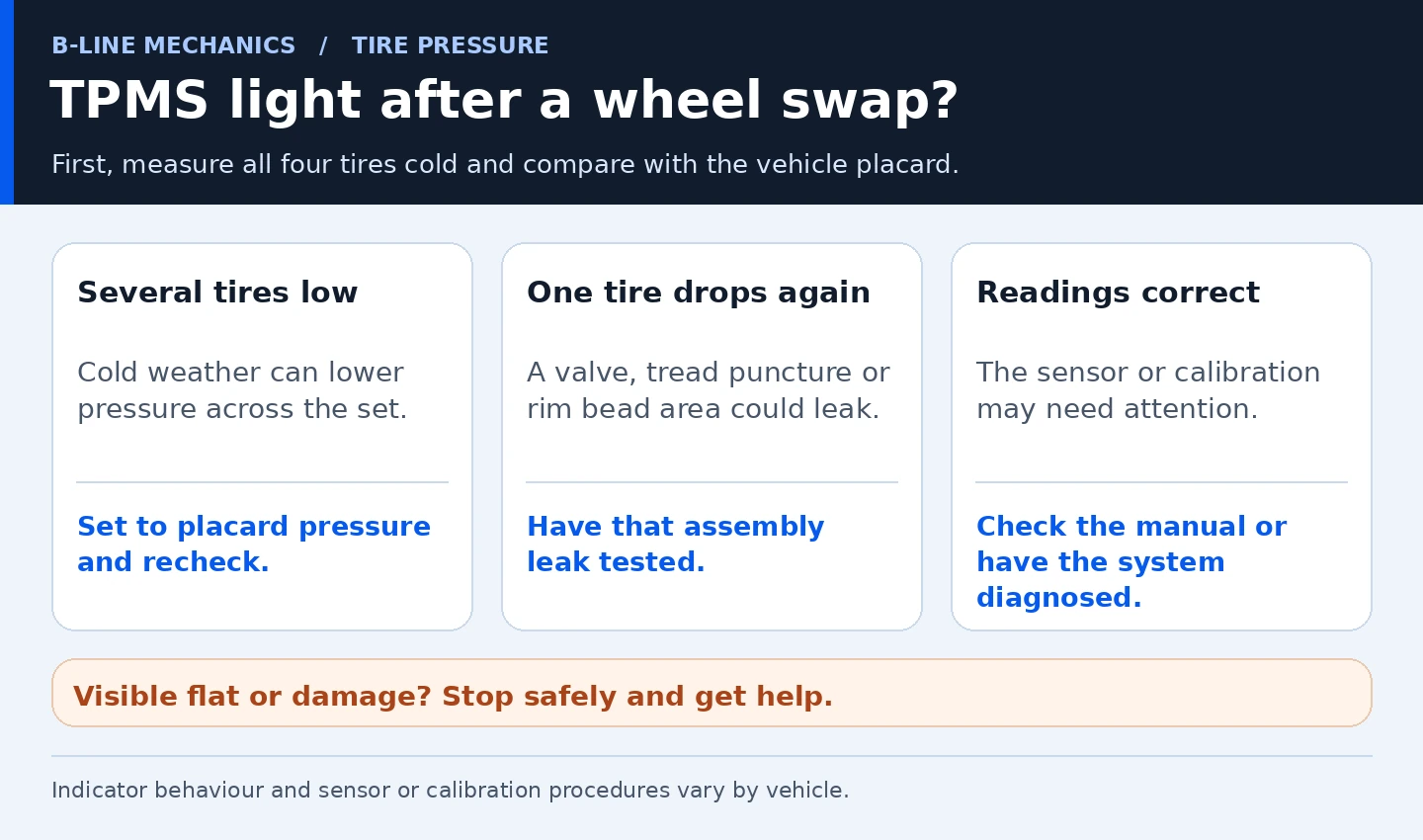
If the tire pressure light comes on after a winter tire change, check the actual pressure in all four tires while they’re cold. Use the vehicle’s tire placard or the approved specification for your wheel and tire setup. Several tires reading below target after a cold night point toward a pressure check and correction. One tire repeatedly losing air needs a leak test. If the pressures are correct and the light flashes or a system warning remains, check how your vehicle learns or monitors its winter wheels.
Start with a gauge and the tire placard
If the warning comes on while driving, pull over somewhere safe as soon as practical and look for a visibly flat or damaged tire. Call roadside assistance if it looks unsafe to drive or the car feels unstable. For a routine pressure check, measure before driving, when the tires are cold. The placard is usually on the driver’s door or door jamb. Front and rear recommendations can differ. The pressure moulded into the tire sidewall is a tire limit associated with its load rating. Use the vehicle’s recommended cold setting for normal inflation. Transport Canada, Riding on Air
Write down each reading and the position on the vehicle. That information tells us more than the light alone, especially if it disappears once the tires warm up. Transport Canada’s short video shows how to check pressure and measure tread with a gauge. Watch Winter Tire Pressure
| What you find with a gauge | What it suggests | What to do next |
|---|---|---|
| Several tires are a little below their respective cold targets | A temperature drop or low starting pressures may have affected the set. | Set the correct cold pressures, record them and recheck after another cold soak. |
| The same tire is below target again after correction | A puncture, valve leak, bead leak or wheel damage is possible. | Have that assembly leak-tested. A tire that loses pressure quickly needs urgent attention. |
| All four are correct but the warning flashes or the car says the monitor has a fault | The vehicle may be missing a sensor signal or need its specified relearn. | Check your owner’s manual for the warning pattern and have the system diagnosed if it persists. |
Why one winter wheel can keep losing air
A tire can lose air slowly through the tread, the valve or the bead. The bead is the part of the tire that seals against the rim. Corrosion or damage at that contact surface can leave a path for air, sometimes on the less visible inside edge of the wheel. A technician can narrow down where the leak is coming from, then inspect the tire and wheel to decide whether a safe repair is possible. GM documents bead-seat corrosion as a potential cause on vehicles covered by its service bulletin. GM bulletin 08-03-10-006I
Tell us if it’s the same corner each time and how long it took to drop. If you record the pressure at similar temperatures, we can compare the readings without guessing how much of the change came from the weather. Keep in mind that TPMS may only warn once the tire is significantly underinflated. Transport Canada, tire pressure monitors
Do your winter rims need TPMS sensors?
That depends on whether your vehicle uses a direct or indirect system. A direct system measures pressure using sensors mounted in the wheels. A second set of wheels generally needs compatible sensors if you want the system to function as designed. Some cars learn sensor IDs through a specified drive procedure. Other vehicles need registration or a different wheel-set selection.
An indirect system estimates a change in pressure using data such as ABS wheel speeds. It may need calibration at the correct cold pressures after the change. Mazda provides a good illustration of why the year and trim matter. Equipped 2018 Mazda3 models use the ABS wheel speed sensors and specify initialization. The 2025 Mazda3 manual describes wheel pressure sensors with unique IDs that the vehicle must register. Mazda Canada 2018 Mazda3 TPMS · Mazda Canada 2025 Mazda3 TPMS
If you’re shopping for a second set, confirm the wheel size, sensor requirements and fitment while you can still return it. B-Line’s AWD winter wheel and tire fitment guide
Frequently asked questions
Can cold weather bring the light on in the morning and make it go off later?
Yes. Cold air can lower inflation pressure, and pressure rises as the tire warms. Check it cold against the placard. If the same tire keeps reading low after correction, have it checked for a leak. Transport Canada winter tire guidance
Should I press the TPMS reset button first?
Measure and set the pressures first. Some systems use the pressure at initialization as a reference. Starting with a low tire can teach the system the wrong baseline. Follow the procedure for your vehicle after confirming the tires are safe.
Is a flashing light always a bad sensor?
It can indicate a system fault, incompatible or missing sensors, an incomplete relearn or another issue. Read the message in the cluster and note whether the light flashes at startup and then stays on. That timing helps the shop diagnose the system, especially if the warning started when the wheels were changed.
Bring the readings and tell us when the warning started
If you need help in Mississauga, tell us the year, make and model, whether you swapped mounted wheels or only changed the tires, and what the gauge showed at each corner. Include the warning pattern and any repeated pressure loss. Tire service in Mississauga · Book an appointment