
If you drive regularly on salted roads, aim for a thorough underbody and wheel-well rinse about once a month through winter and again when the salt season ends. Rinse sooner after repeated drives through salty slush or when there’s heavy buildup. Pick a time when the car can drain and you can dry the door edges before water refreezes. Check your own manual for wash frequency and restrictions. Mazda Canada gives a monthly rinse and a thorough spring flush as guidance for the 2018 Mazda3. Mazda Canada underbody maintenance
Wash when the car picks up salt
Mississauga uses rock salt on roads and can apply liquid brine to priority routes before a storm. You can pick up salt on a damp commute even when the road looks clear of snow. White streaks on the rocker panels and gritty buildup behind a wheel are reasons to check the lower body. Use your recent driving conditions to judge whether the next wash should include the underside. City of Mississauga snow clearing and road treatments
Damp grit holds salty moisture against the metal. A stone chip or scraped coating leaves the surface especially vulnerable. A thorough rinse removes those deposits, which matters during wet spells around freezing when the buildup can stay damp. Kia Canada corrosion prevention guidance
| What you’re seeing | What to do | What to check afterward |
|---|---|---|
| A few dry trips since a thorough wash | Keep your usual schedule and check the lower body at the next wash. | Look at the edges of the wheel openings and behind the mud flaps. |
| Several commutes through salty slush or a gritty white film on the lower panels | Rinse sooner when conditions allow. Include the wheel housings and accessible underside. | Check whether visible deposits have actually washed away. |
| Deep freeze with outdoor parking after the wash | Choose a milder window if you can, or use a wash where you can dry exposed edges and allow water to drain. | Dry the door and hatch edges, and follow the manual if a latch or handle freezes. |
| The last salted stretch of the season is behind you | Give the underbody and wheel housings a thorough rinse. | Look for paint chips, loosened liners, coating damage and corrosion worth inspecting. |
Where to rinse and where to be careful
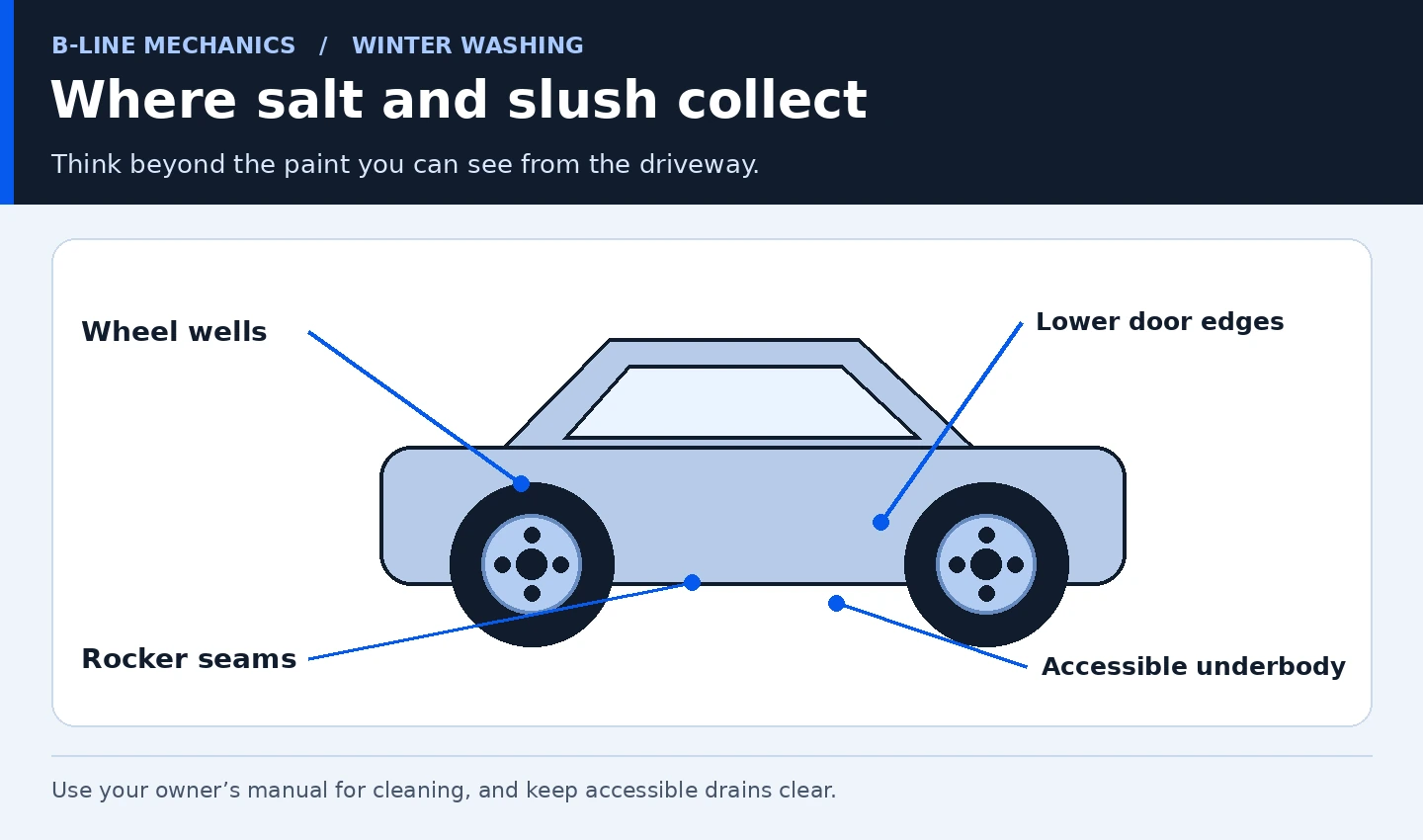
Snow and grit gather around the wheel-arch lips, behind mud flaps and along the lower door and rocker edges. Rinse the accessible wheel housings and underside with cool or lukewarm water where the manual allows it. Work until loose deposits have flushed away. Check visible drain openings along the lower edges for dirt. If a drain seems blocked or a panel sounds like it holds water, have the area checked before inserting a tool into it. Kia Canada exterior and corrosion care
Before you select a high-pressure underbody cycle, read the exterior care section for your vehicle. Pay particular attention to seals, sensors, exposed wiring and charge ports. For example, Tesla’s Canadian Model Y manual gives spray-distance and sensor precautions and specifies Car Wash Mode for a car wash. Mitsubishi directs technicians to avoid a high-pressure underbody wash on the Outlander Plug-in Hybrid. A wash option that suits one model can exceed another model’s limits. Tesla Model Y cleaning instructions · Mitsubishi salted-road technical guidance, page 5
Once the car is out of the wash, check brake response at low speed where it’s safe. Follow the manual’s procedure for drying wet brakes. If stopping performance stays reduced or the brake pedal feels soft, stop safely and arrange assistance. Kia Canada underbody and wet-brake instructions · Transport Canada winter vehicle preparation
When salt and dirt are trapped behind a liner
A drive-through rinse reaches exposed surfaces. Packed dirt behind a liner or undertray may need the cover removed for cleaning and inspection. If a liner is loose, the same corner keeps shedding grit, or you see flaking metal at an edge, ask a shop to look behind the cover. When an underside is on a lift, a technician can assess whether the concern involves a body seam, a line or a mounting point and explain what needs attention. Mitsubishi underbody inspection guidance, page 5 · B-Line’s Mazda winter underbody guide
How to wash a rustproofed car
Ask the applicator for the product name, the first wash date and any restrictions on underbody jets or detergents. Aftercare varies by treatment. Rust Check advises waiting before washing a freshly treated vehicle, while Corrosion FREE permits washing after treatment and advises against underbody degreasers. If you have peeling coating or scaling under a previous treatment, have its condition assessed before applying more product. Rust Check aftercare · Corrosion FREE aftercare · B-Line’s rustproofing and undercoating guide
Frequently asked questions
Should I wash my car after every snowstorm?
Use salt exposure as your cue. A car that stayed parked through the storm may need no extra wash. If you drove through brine and dirty slush for several days, move your rinse up to the next suitable opportunity.
Is an undercarriage wash worth it in winter?
Yes, when your car has been driven on salted roads and the wash suits the vehicle. It helps flush deposits from surfaces the exterior wash misses. Check whether the package includes an underbody rinse and give the accessible wheel wells attention as well.
Is it better to wash my car on a warmer winter day?
A milder day gives water longer to drain before it can freeze around a handle, weatherstrip or hatch edge. If you wash during a cold snap, dry the accessible edges and follow the owner’s manual for any model-specific cold-weather precautions. Tesla Model Y cold-weather guidance
Get an underbody concern checked in Mississauga
If you see flaking metal, damaged coating or persistent buildup behind a loose shield, tell us where you found it and whether the car was treated previously. Ask whether the area needs an inspection first and what treatment would cover for your vehicle. B-Line rustproofing service in Mississauga · Book an appointment with B-Line Mechanics