
Yes, in some cases. Light surface oxidation on sound metal can be a candidate for treatment after inspection and preparation. Flaking scale, damaged mounts, corrosion around brake lines or holes in structural metal need assessment before anything is covered. Ask the technician to show you the surface before coating and explain whether it needs preparation, a repair or replacement.
Start with the part and the condition
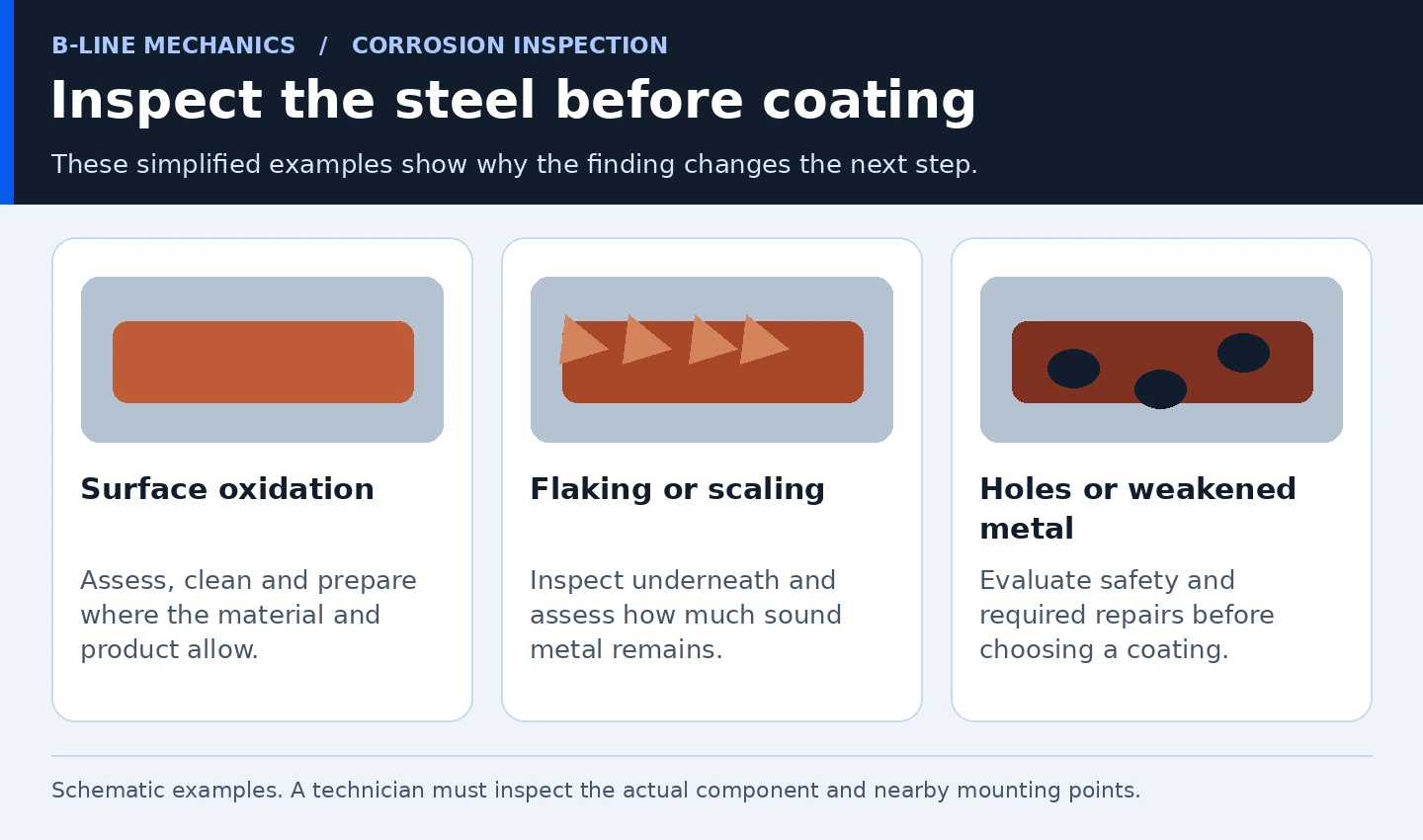
A rusty-looking heat shield, a pitted brake line and a weakened suspension mount call for different decisions. Begin by finding out which part is affected and what it does. Then check whether the rust is a thin surface layer, whether it flakes off in layers, and whether the corrosion has reduced the metal’s thickness. Location also matters. Corrosion right around a mounting bolt, a seam or a retaining clip may deserve a closer look than a larger stain on an exposed surface.
Ontario’s passenger and light-duty vehicle inspection standard makes a similar distinction. It describes some exterior surface corrosion as normal and identifies material loss that weakens frames, rails and structural subframe assemblies among rejection criteria. The following table helps you interpret an inspection discussion. The actual decision depends on the part and what the technician can see and assess. Ontario inspection standard, Section 8, Frame, Rails and Mounts
| What the technician finds | What it may indicate | Next decision |
|---|---|---|
| Thin surface oxidation on metal that still appears sound | An exposed finish has deteriorated | Assess the surface, then prepare and protect it if the product permits |
| Flakes, heavy scale or lifting coating | Rust or failed material can obscure the condition underneath | Expose enough of the affected area to assess it before selecting a treatment |
| Deep pitting, section loss, cracks or perforation around a load-bearing area | The part or mounting point may have lost strength | Assess repair or replacement before deciding how to protect it |
| Corrosion or suspected leakage at a brake line or retaining clip | The line needs a brake-system inspection | Address the line’s condition first, then discuss protection for permitted areas |
How preparation changes the outcome
Cleaning lets the technician see the surface and gives the chosen product a suitable base. Loose corrosion and loose old coating need evaluation so the shop can decide what must be removed. Product instructions determine the next steps. For a specific example, 3M’s 08881 undercoating requires clean, properly prepared surfaces and masking of areas outside the coating scope. Its technical sheet also flags possible incompatibility with original sound-deadening materials. A shop checking an old coating should identify whether the proposed product can go over the stable material or needs a different preparation. 3M 08881 technical data sheet
For rust beneath a shield or in a seam, ask what the technician could inspect and whether more access is necessary. A fresh, opaque finish can make the earlier condition harder to see. Before-treatment photos give you a record of what was visible and where the shop found damage. If a weakened part needs work, ask whether the correct next step is a replacement, an approved structural repair or an evaluation by a body repair specialist.
Kia’s SC238A campaign provides a concrete example of the order. On certain 2014–2017 Forte and Forte Koup vehicles covered by the U.S. campaign, technicians inspect the brake lines, including around the retaining clips, and replace affected lines where indicated before applying the prescribed corrosion protection. A suddenly soft brake pedal or a suspected brake-fluid leak calls for a safe stop and roadside assistance. For other symptoms, see the guide to brake service in Canadian salt and rust. Kia SC238A inspection and repair procedure
Decide which areas need protection
Where the metal remains serviceable, an appropriate undercoating can protect prepared exposed surfaces like parts of the floor pan or wheel housings. A suitable cavity product can reach into accessible closed sections and seams that an exterior application cannot reach. GM’s repair guidance describes the two uses and directs technicians to protect moving parts and leave drains open. Ask which exposed areas and cavities a quote includes. Our guide to rustproofing without drilling shows how access affects that answer. GM anti-corrosion repair guide
If you see scaling, bubbling finish at a mounting point or damaged coating after a salted-road season in Mississauga, mention it when you contact the shop. Ask for the affected part, its assessed condition, and the next step in writing or on the estimate. B-Line Mechanics’ rustproofing service asks drivers to share their vehicle, previous treatments and visible rust so the shop can discuss whether an assessment should come before the treatment.
Frequently asked questions
Can you put rubberized undercoating over flaking rust?
Have loose rust and the metal beneath it assessed first. A coating needs a suitable surface to adhere to, and heavy scaling can obscure corrosion depth. If the metal is sound after preparation, choose a compatible product based on its technical instructions and the part involved.
Is it too late to rustproof a vehicle with surface rust?
An older vehicle can still have sound areas worth protecting. Have the technician identify any parts needing repair, explain what can be prepared, and show what can be treated safely. You can then weigh the cost of protection against the condition of the vehicle and how long you plan to keep it.
Can undercoating make a rusty car pass an Ontario safety inspection?
Ontario requires the vehicle to meet minimum inspection criteria at the time of assessment. If rust has weakened a frame member or mounting area, address the condition of that part before an inspection. Coating adds surface protection, while a repair or replacement addresses lost strength. Ontario safety standards certificate