
Yes. A shop can protect suitable exposed underbody areas without making holes. It can also treat some enclosed areas through existing access points when the vehicle design allows it. Ask which areas the shop can reach on your year, make and model, which it will leave untreated, and how it will keep the drains clear. A no-drill quote can describe several different levels of coverage.
What can a shop reach without drilling?
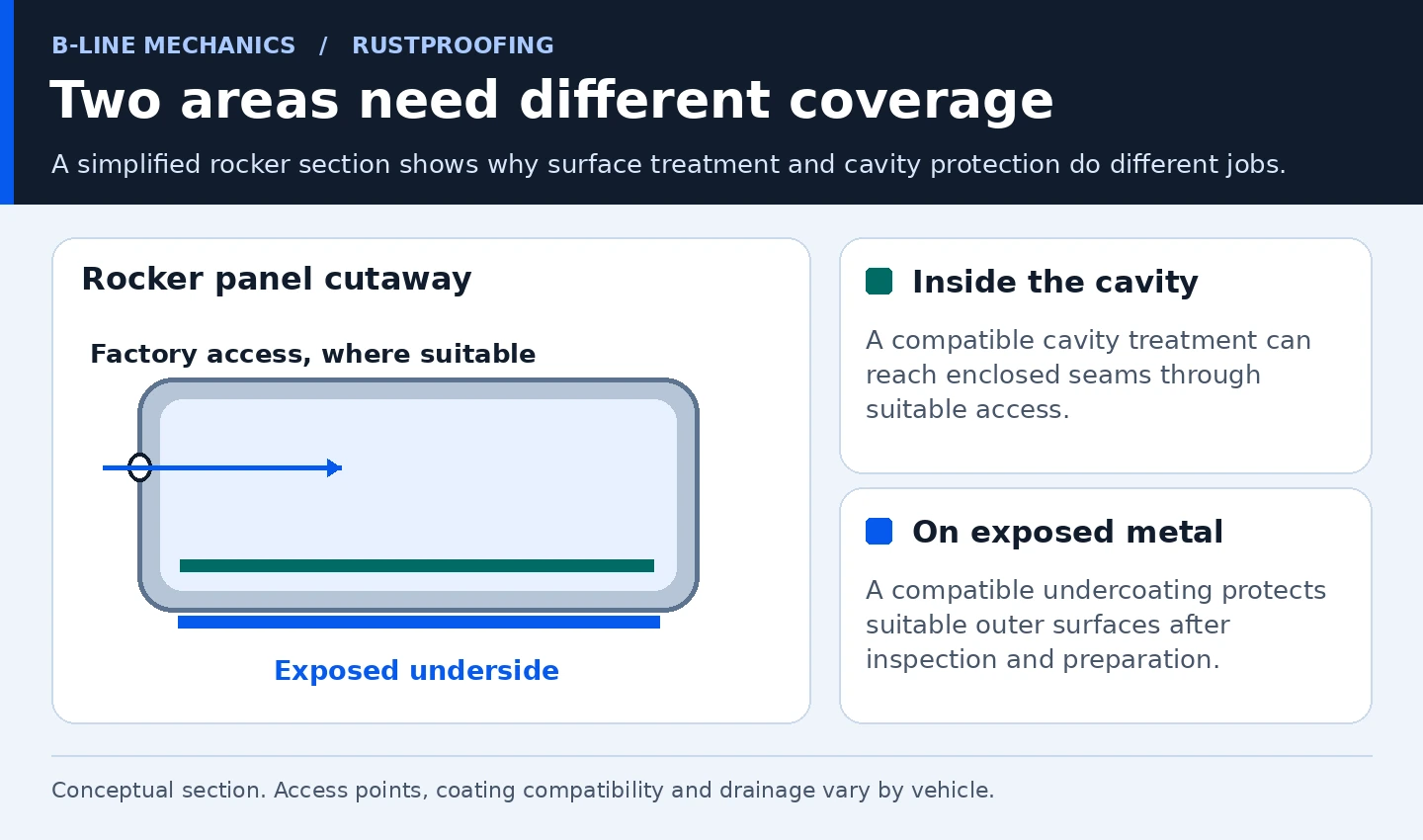
Look at the job one area at a time. A technician can reach an exposed floor pan or wheel housing from outside the vehicle. The inside of a rocker panel, the long section below the doors, may require a wand through an existing service opening. A plug can close a factory service opening, while a drain at the bottom of the same panel has to stay open to let water out. The vehicle’s repair information helps the technician tell those openings apart and locate barriers inside a panel.
Manufacturers document how this can work. Tesla’s 2024 and newer Model 3 collision repair manual directs technicians to use factory access holes and a 360-degree wand to restore protection inside cavities after refinishing. Kia’s SC141 service campaign for specified vehicles uses designated service holes and calls for checking the wax coverage with a borescope. Those procedures show how access and coverage can be confirmed for a specific job. For a routine application, ask the shop to identify its access and verification method for your vehicle. Tesla Model 3 post-repair operations · Kia SC141 service campaign
| Area | How treatment can reach it | What to verify before approving |
|---|---|---|
| Exposed floor pan or wheel housing | From outside, with preparation and a compatible underbody product | Which surfaces are included and whether shields or liners limit access |
| Inside a door or rocker panel | Through a suitable factory opening where the design permits wand access | Which cavity sections the wand reaches and which the shop will omit |
| Door and rocker drains | The openings need to remain clear so they can discharge water | How the shop checks drainage after application |
| Retractors, locks, window mechanisms and sensitive electrical areas | Identify and protect components according to the vehicle and product requirements | The shop’s procedure for preventing product from entering or interfering with them |
GM’s collision repair guidance distinguishes protective coatings for exposed areas from products designed to creep into concealed seams. It also identifies moving mechanisms to protect and directs technicians to leave body drains open. Our rustproofing and undercoating guide explains where each approach fits. GM anti-corrosion repair guide
Why do some shops drill access holes?
An access hole lets a wand enter a cavity from an otherwise inaccessible angle. Krown, for example, describes making small access holes in selected areas and treating and plugging them afterward. Before agreeing to an opening, ask where it would be, why existing access falls short, which manufacturer instructions apply, and how the new metal edge would be protected. Drilling through a painted panel exposes its cut edge. A plug closes the opening, while corrosion protection addresses the edge itself. Krown’s application FAQ
The drill’s path can matter as much as its entry point. A door or pillar may conceal wiring, a seat belt retractor or restraint components. A hybrid or EV can also have high-voltage cables or a battery enclosure close to a work area. Tesla, for instance, requires high-voltage battery removal before procedures that could involve drilling near the pack on the 2024 and newer Model 3. Ask the technician to check the procedure for the exact location and model before any new hole is considered. Tesla Model 3 electrical precautions
What to ask a Mississauga shop before treatment
- Which areas can you reach on this vehicle? Ask about exposed surfaces, enclosed cavities and areas blocked by shields or internal partitions.
- Where will you access each cavity? Ask which factory openings the shop will use and whether it proposes creating any openings.
- How will you check the application? Ask if the technician can show photos of the exposed areas and, where practical, inspect the cavity through an existing opening.
- Is any area too rusty to coat now? Document suspect spots first. Use our guide to undercoating a car with existing rust to understand when preparation or repair comes first.
If you want to compare options at B-Line Mechanics in Mississauga, share your year, make and model or VIN, any previous treatment, and the areas that concern you. Ask the shop to confirm the proposed access points and treatment scope before you approve the work.
Frequently asked questions
Does undercoating reach inside the rocker panels?
An application to the underside covers the exposed areas the product contacts. Inside a closed rocker, coverage depends on a suitable access route, a product intended for cavities and the wand reaching the intended sections. Ask whether rocker interiors are included in the quote.
What if another shop already drilled holes?
Show the technician any plugs or openings and share the previous treatment paperwork if you have it. A technician can identify the likely purpose, look for loose plugs or corrosion at the edges, and check drainage before planning additional treatment. Leave unfamiliar openings in place for inspection.
Can rustproofing affect my corrosion warranty?
Check the warranty issued with your vehicle before approving any treatment. Terms can differ by maker and warranty. Tesla’s Canadian warranty, for example, excludes vehicles treated with rustproofing or undercoating under its Body Rust Limited Warranty. Read the terms that apply to your vehicle and ask the manufacturer for clarification if you are unsure how a proposed treatment affects coverage. Tesla Canada New Vehicle Limited Warranty